Dear readers,
Thank you for being part of our growing community. Here’s what’s new this today,
Project Management Interview Preparation: How Do You Create a Project Roadmap?
Note: This post is for our Paid Subscribers, If you haven’t subscribed yet,
Every successful project begins with clarity of purpose and direction. Yet one of the most common reasons projects fail to meet their original goals is the absence of a shared, strategic overview that keeps all stakeholders aligned throughout the project lifecycle. A well-constructed project roadmap directly addresses this challenge.
A project roadmap is a high-level visual overview that outlines a project’s goals, major milestones, key deliverables, and expected timeline on a single, easy-to-understand document. Rather than drilling into every individual task, a roadmap highlights the big commitments: the outcomes the team is working toward, the major phases of work, and the sequence of events needed to reach the finish line.
According to a KPMG project management survey, only about 33 percent of organizations deliver projects that are likely to meet their original goals or business objectives. A significant contributing factor is the lack of a strategic overview that keeps diverse stakeholders on the same page. The project roadmap serves as that strategic compass, translating vision into a plan that everyone can understand and rally behind.
This article provides a comprehensive, step-by-step guide to creating an effective project roadmap. It covers the definition and purpose of a roadmap, its essential components, the step-by-step creation process, different types of roadmaps, how a roadmap differs from a project plan, best practices for maintenance and presentation, common pitfalls to avoid, and recommended tools.
What Is a Project Roadmap?
A project roadmap is a visual and strategic planning tool that clearly outlines a project’s key components, milestones, and timelines. It provides a high-level overview of what is being built, why it matters, and when the major milestones will be achieved. Think of it as the executive summary of your project’s journey from initiation to completion.
Unlike a detailed project plan that breaks work down into individual tasks, daily schedules, and assignments, a roadmap focuses on the macro perspective. It distills the essentials of your project scope so teams and stakeholders can quickly understand what is happening, when key moments will occur, and how the work fits together. The roadmap answers the questions “what are we doing?” and “why does it matter?” while the project plan answers “how exactly will we do it?”
Project roadmaps are dynamic, updatable documents that evolve to reflect changes in scope, resources, or timelines. They are not static artifacts created once and then forgotten. The best roadmaps are living documents reviewed and adjusted regularly as the project progresses and new information emerges.
Roadmaps are particularly valuable when projects involve multiple teams, cross-functional coordination, or stakeholders who need regular updates without wading through operational details. They are commonly used by project managers, program managers, and project management offices (PMOs) as portfolio management tools to keep track of multiple concurrent projects.
Key Distinction: Roadmap vs. Project Plan
A project roadmap provides a bird’s-eye view of the project for stakeholders and leadership, highlighting goals, milestones, and strategic direction. A project plan dives into the granular details necessary for execution, including step-by-step actions, responsible parties, and timelines for each individual task. The roadmap communicates the “what” and “why”; the project plan communicates the “how” and “who.” Both are essential, and the project plan should develop naturally from the roadmap.
Why You Need a Project Roadmap
A project roadmap is not just a nice-to-have visual; it is a critical planning and communication tool that delivers tangible benefits throughout the project lifecycle:
• Alignment and Clarity: A roadmap ensures that everyone, from executives to individual contributors, shares the same understanding of the project’s goals, priorities, and timeline. It eliminates ambiguity and creates a single source of truth.
• Stakeholder Communication: Roadmaps provide a common reference point for discussing project status and changes without getting bogged down in task-level details. They allow project managers to quickly brief executives and secure alignment.
• Prioritization and Focus: By mapping goals to milestones and deliverables, a roadmap helps teams identify which tasks are most critical and where resources should be concentrated.
• Risk Identification: Mapping out the project lifecycle highlights where challenges, dependencies, or delays in certain activities could affect other project areas. This enables proactive risk mitigation.
• Agility and Adaptability: As a living document, the roadmap can be adjusted when circumstances or priorities shift while maintaining alignment on overall goals. It provides the flexibility that rigid plans often lack.
• Expectation Management: Small, unplanned changes often accumulate during execution and gradually derail projects from original objectives. A roadmap helps manage these situations by keeping all stakeholders focused on the agreed-upon goals.
• Decision Support: When priorities conflict or resources are limited, the roadmap provides the strategic context needed to make informed trade-off decisions.
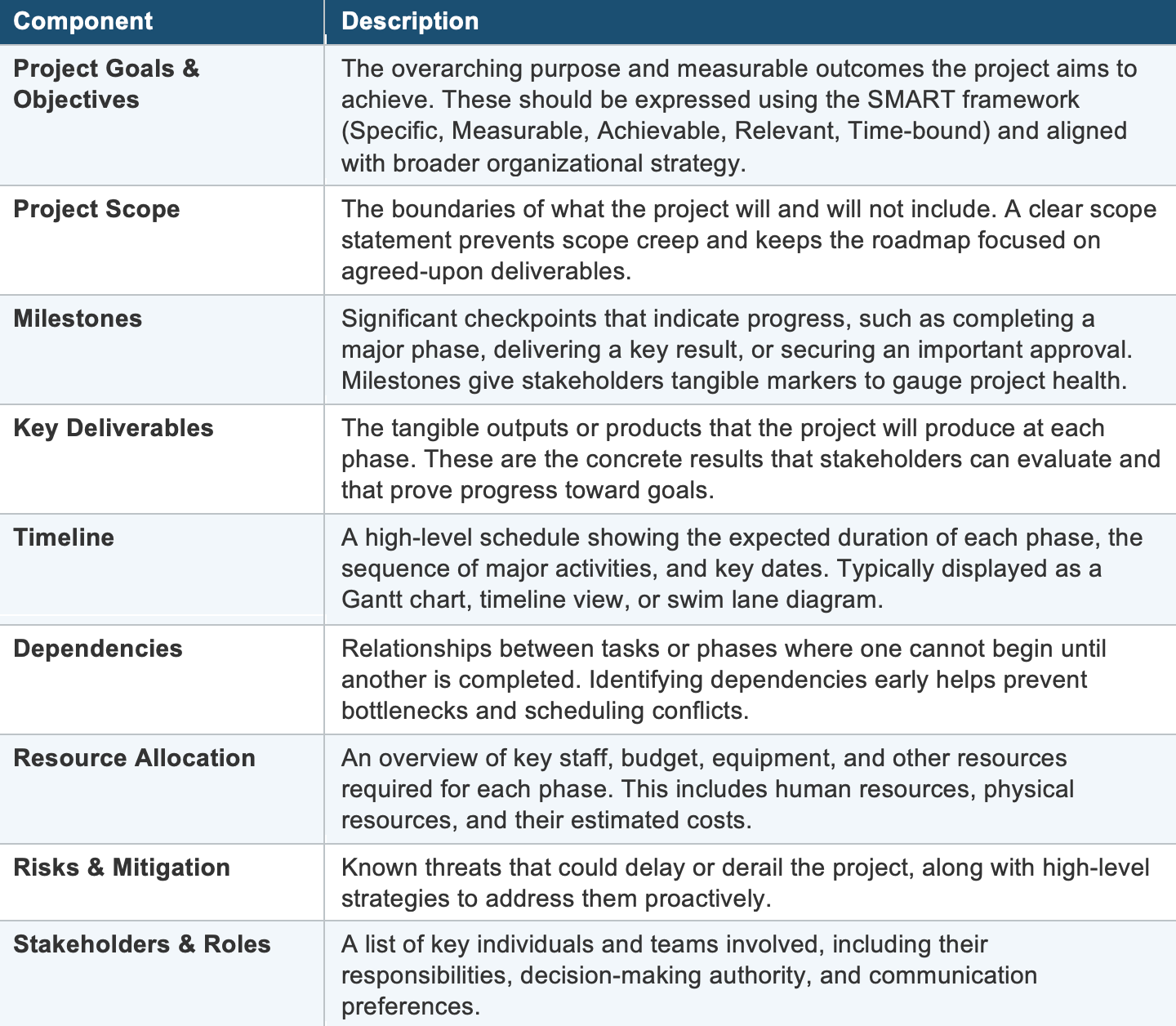
Key Components of a Project Roadmap
An effective project roadmap contains several essential elements that together provide a complete strategic overview. While specific details vary by project and audience, the following components should be present in every roadmap: