

Dear readers,
Thank you for being part of our growing community. Here’s what’s new this today,
Project Management Interview Preparation: What is the critical path method?
Note: This post is for our Paid Subscribers, If you haven’t subscribed yet,
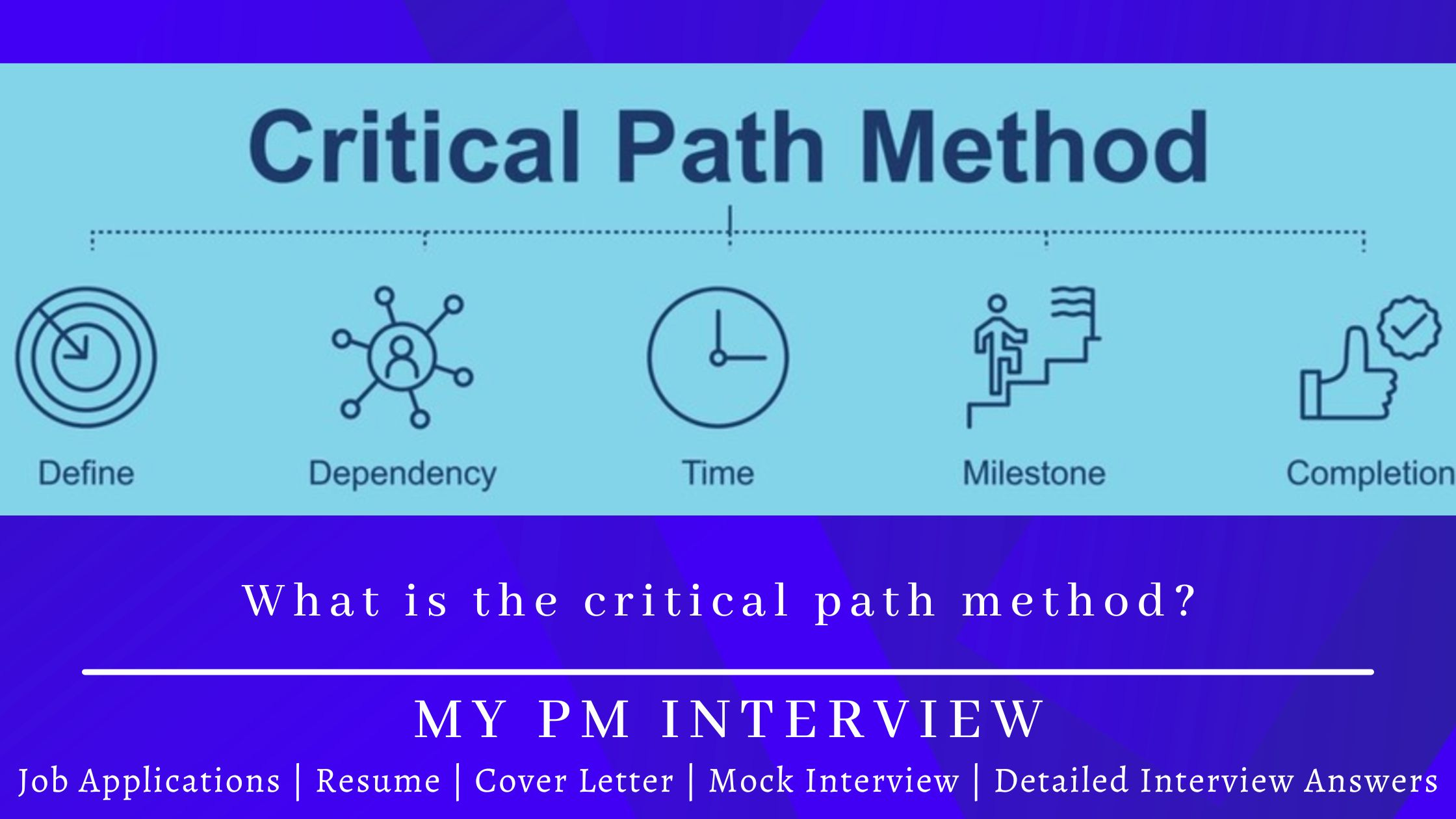
Table of Contents
1. What Is the Critical Path Method?
2. Historical Background
3. Why Use the Critical Path Method?
4. How to Calculate the Critical Path: Step-by-Step
5. Worked Example: Website Launch Project
6. Managing the Critical Path During Execution
7. Industry Applications
8. CPM vs. PERT: Understanding the Differences
9. Advantages and Limitations of CPM
Every project manager has faced the challenge of expanding timelines. Deadlines shift, tasks take longer than expected, and a once-manageable project falls behind. The root cause is rarely poor effort or unmotivated teams. More often, it is the absence of a structured method for identifying which tasks truly drive the project’s completion date.
The Critical Path Method (CPM) solves this problem. It is a systematic project management technique for planning, scheduling, and controlling complex projects by identifying the longest sequence of dependent tasks, the sequence that determines the absolute minimum time in which the project can be completed. Any delay to a task on this critical path directly delays the entire project.
Originally developed in the late 1950s by James E. Kelley of Remington Rand and Morgan R. Walker of DuPont, CPM was created to address scheduling challenges in large-scale industrial and construction projects. It has since become one of the most widely recognized techniques in the Project Management Body of Knowledge (PMBOK) and remains a cornerstone of modern project scheduling practice.
What Is the Critical Path Method?
The Critical Path Method is an algorithmic approach to project scheduling. It helps project managers determine the sequence of activities, their duration, and the relationships between them. The entire project is visualized as a network diagram, with nodes representing tasks or milestones and arrows (or edges) representing the dependencies between tasks.
PMBOK Definition
According to the Project Management Institute (PMI) in the PMBOK Guide, the Critical Path Method is “a method used to estimate the minimum project duration and determine the amount of scheduling flexibility on the logical network paths within the schedule model.”
The primary purpose of CPM is to determine the shortest possible time to complete a project. It achieves this by identifying the critical path, a sequence of tasks that directly impacts the project completion date. Any delay in the tasks along the critical path will cause a corresponding delay in the entire project. Meanwhile, tasks not on the critical path may have some flexibility, known as “float” or “slack,” meaning they can be delayed to some extent without affecting the project’s end date.
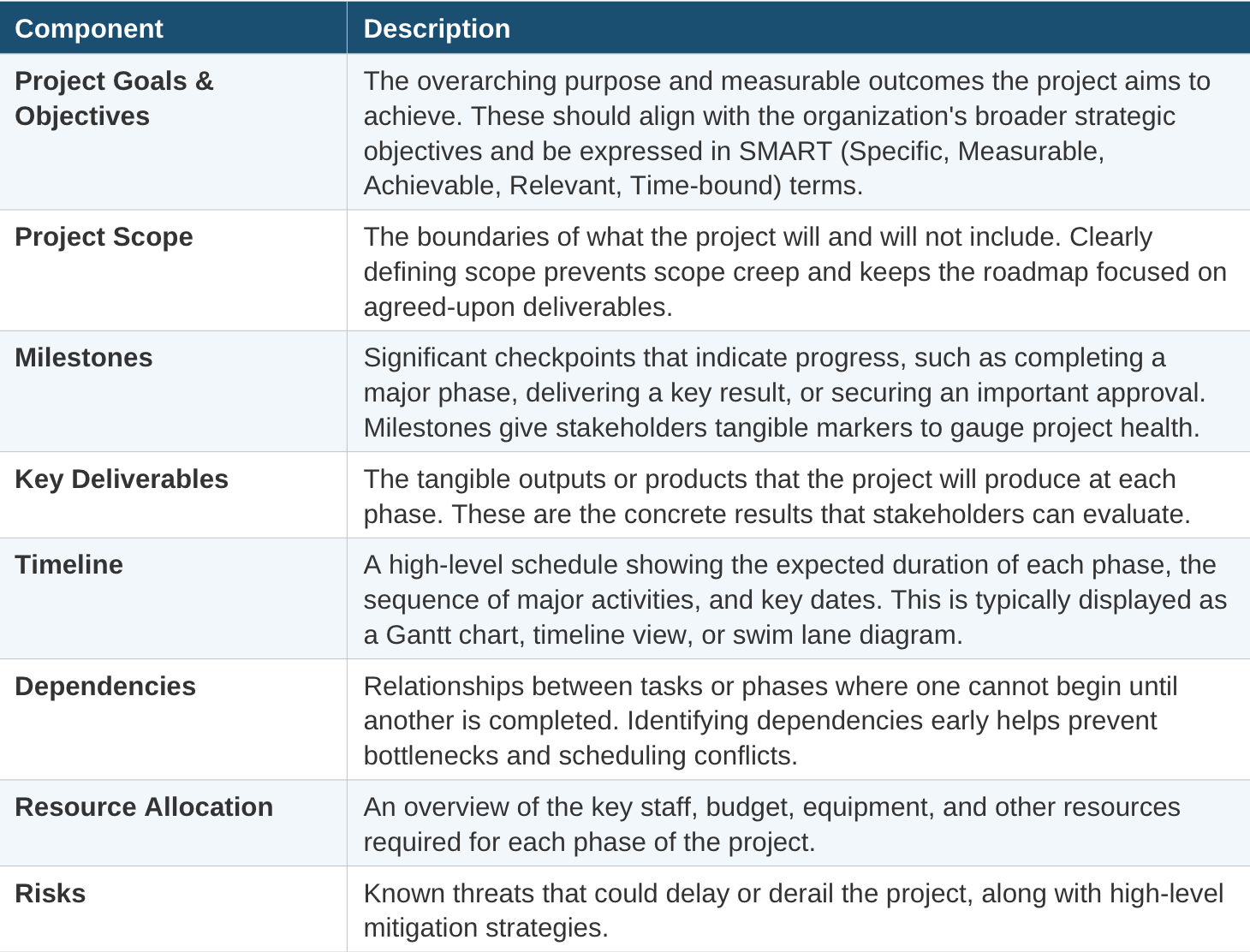
Key Terminology
Historical Background
In the 1950s, project delays were a serious and costly problem in large-scale industrial operations, and there was very little structured methodology available to prevent them. Two parallel developments changed this landscape permanently.
At DuPont, engineers James E. Kelley and Morgan R. Walker developed what would become the Critical Path Method in 1957. Their goal was to optimize the scheduling of plant maintenance shutdowns, complex projects with hundreds of interdependent tasks that needed precise coordination. The method they created focused on deterministic time estimates and the trade-off between project time and cost.
Simultaneously, the United States Navy’s Special Projects Office, working with Lockheed Aircraft and the consulting firm Booz Allen Hamilton, developed the Program Evaluation and Review Technique (PERT) to manage the Polaris missile submarine program. While PERT used probabilistic time estimates (optimistic, most likely, and pessimistic durations), both techniques shared the fundamental concept of network-based scheduling and critical path identification.
Over the decades, the distinctions between PERT and CPM have blurred, and the two are frequently used in conjunction. Today, the critical path method is embedded in virtually every modern project management software platform and is recognized by the Project Management Institute as an essential scheduling technique in the PMBOK framework.
Why Use the Critical Path Method?
The Critical Path Method is not merely an academic exercise, it is a practical tool that directly improves how projects are planned, executed, and monitored. Project managers adopt CPM for several compelling reasons:
• Accurate Duration Estimation: By mapping all tasks and their dependencies, CPM calculates the minimum time needed to complete the project, providing a realistic baseline for planning.
• Task Prioritization: It clearly distinguishes between critical tasks (zero float) that must be completed on time and non-critical tasks that have scheduling flexibility.
• Resource Optimization: Understanding float allows managers to redistribute resources from non-critical tasks to critical ones, preventing bottlenecks and improving efficiency.
• Risk Identification: The critical path highlights the tasks where delays have the greatest impact, allowing risk management efforts to be concentrated where they matter most.
• Schedule Compression: When a project must be accelerated, CPM shows exactly which tasks need to be shortened (through crashing or fast-tracking) to reduce the overall timeline.
• Enhanced Communication: The visual network diagram gives all stakeholders a shared understanding of the project timeline, dependencies, and priorities.
• Performance Tracking: During execution, the planned schedule serves as a baseline for comparing actual progress with planned task completion, enabling early detection of schedule variance.
